On July 1, 2026, in the historic Dal Mandi quarter of Varanasi, Uttar Pradesh, workers began demolishing the walls of several mosques as part of a road-widening and "beautification" project. The mosques affected include the Karimullah Beg Mosque, Langde Hafiz Mosque, Nisaran Mosque, Rangile Shah Mosque, Ali Raza Mosque, and Sangmarmar Mosque.
To ensure security during this operation, nearly 1,860 personnel were deployed at the site. In addition to the personnel, three drone surveillance teams and multiple bulldozers were also utilised. The entire area was sealed off with barricades, bamboo fencing, and tin sheets to restrict movement through nearby roads and lanes. Drone surveillance was ongoing throughout the operation, while approximately 200 labourers were involved in the demolition work.
A few days ago, on June 29, 2026, the historic Juna Kunda Mosque in the Gandhidham area of Kutch, Gujarat, was completely demolished using heavy machinery. Authorities tore down the mosque without any prior notice.
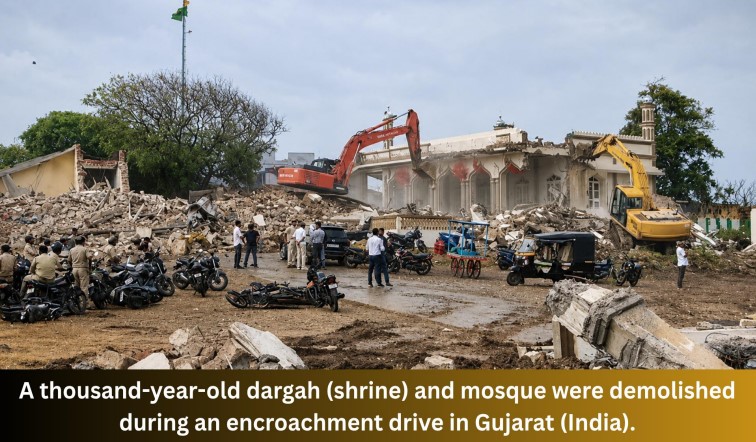
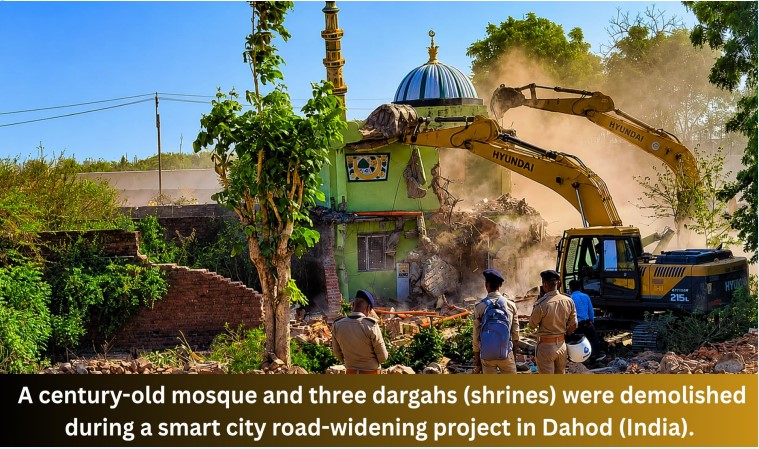
Recently, over 23 mosques, madrasas, eidgahs, and dargahs have been demolished within just 50 days.
This wave of demolitions, which has targeted Muslim religious sites, includes structures ranging from a 1,000-year-old mosque to a 200-year-old dargah, raising serious concerns across several BJP-ruled states in India. These incidents follow a long history of destruction of surrounding islamic sites and heritage, particularly those constructed during the Timurid-Baburid periods.
|
|
|
|
|
|